 |
Shakuhachi
headjoint |
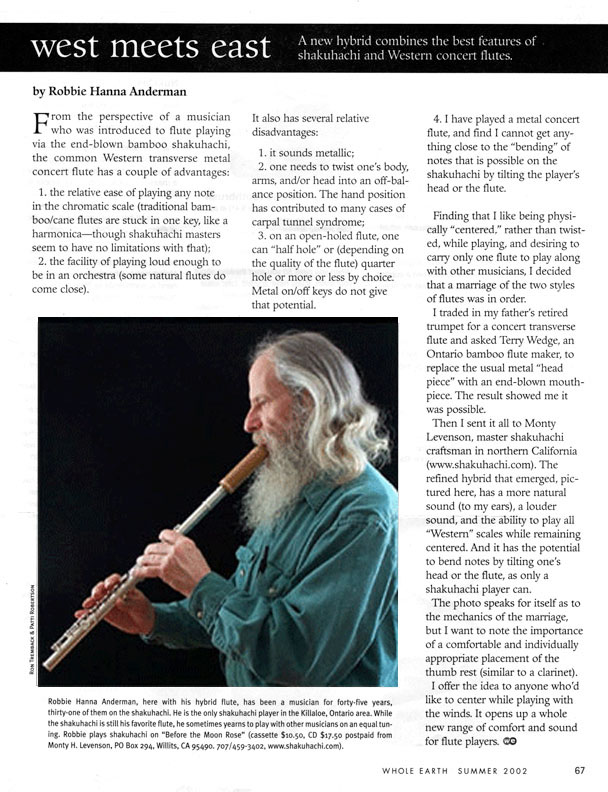
West Meets East Whole Earth Review, Summer, 2002 by Robbie Hanna Anderman From the perspective of a musician who was introduced to flute playing via the end-blown bamboo shakuhachi, the common Western transverse metal concert flute has a couple of advantages: 1. the relative ease of playing any note in the chromatic scale (traditional bamboo/cane flutes are stuck in one key, like a harmonica--though shakuhachi masters seem to have no limitations with that); It also has several relative disadvantages: Finding that I like being physically "centered," rather than twisted, while playing, and desiring to carry only one flute to play along with other musicians, I decided that a marriage of the two styles of flutes was in order.I traded in my father's retired trumpet for a concert transverse flute and asked Terry Wedge, an Ontario bamboo flute maker, to replace the usual metal "head piece" with an end-blown mouthpiece. The result showed me it was possible.Then I sent it all to Monty Levenson, master shakuhachi craftsman in northern California (www.shakuhachi.com). The refined hybrid that emerged, pictured here, has a more natural sound (to my ears), a louder sound, and the ability to play all "Western" scales while remaining centered. And it has the potential to bend notes by tilting one's head or the flute, as only a shakuhachi player can.The photo speaks for itself as to the mechanics of the marriage, but I want to note the importance of a comfortable and individually appropriate placement of the thumb rest (similar to a clarinet). I offer the idea to anyone who'd like to center while playing with the winds. It opens up a whole new range of comfort and sound for flute players. |
 Tai Hei Shakuhachi Homepage